PARIX Audio Day 2026: one of the most international gatherings in the audio industry
PARIX Audio Day once again brought together more than 300 professionals from nearly 20 countries in Madrid this year, making it one of the most international gatherings in the audio industry.
Now in its third edition, the event—organised by the PARIX School of the Germán Sánchez Ruipérez Foundation, led by its director general Luis González, and coordinated by Javier Celaya, founding partner of Dosdoce.com—has established itself as one of the key professional forums dedicated exclusively to analysing how audio is evolving both as a cultural format capable of attracting new readers and as a business generating new revenue streams for the publishing sector.
This year’s edition was undoubtedly the most international to date. More than 50 speakers representing publishers, production companies, technology platforms, recording studios and innovation specialists shared their experiences and strategies throughout the day. For many professionals in the sector, PARIX Audio Day has become one of the few occasions each year to discuss—calmly, or passionately, depending on one’s perspective—the specific challenges of audio with their peers, from production and distribution to narrative formats, business models and technology.
If there was one topic that surfaced in almost every conversation, it was artificial intelligence. In previous editions, the subject had appeared only tentatively, approached with caution or even a degree of unease. This year, by contrast, it was discussed openly and naturally. Although the programme included only three sessions specifically devoted to the topic—George Walkley’s presentation on the impact of AI on publishing workflows, screenwriter Julio Rojas’s creative reflection on AI and storytelling, and Virginia Huerta’s analysis of its influence on content visibility and discovery—the theme surfaced repeatedly across the programme. Platforms, publishers and production companies agreed on one point: regardless of their position in the value chain, the entire sector is experimenting—at different levels—with artificial intelligence tools to understand what role they might play in their workflows and what benefits they could bring.
Across the day, the various presentations at PARIX Audio Day offered a broad overview of the trends shaping the future of audio: from listening habits and catalogue expansion to the emergence of new narrative formats, the development of international markets and the growing role of technology platforms. Below is a review of the day’s programme and the main ideas shared in each session.
Chris Kenneally moderated the morning sessions, which were held in English. A journalist specialising in the audio industry, Kenneally recalled that exactly one year earlier, at the same forum, he had announced the launch of the second season of The Spoken World, a podcast dedicated to analysing key international trends in the sector. The podcast, now supported by sponsors including Penguin Random House, will feature recordings from professional events such as the London Book Fair, as well as exclusive interviews throughout the new season.

Following Kenneally’s introduction, the first speaker of the morning took the stage: Barbara Knabe.
- The synergies between reading and listening to audiobooks
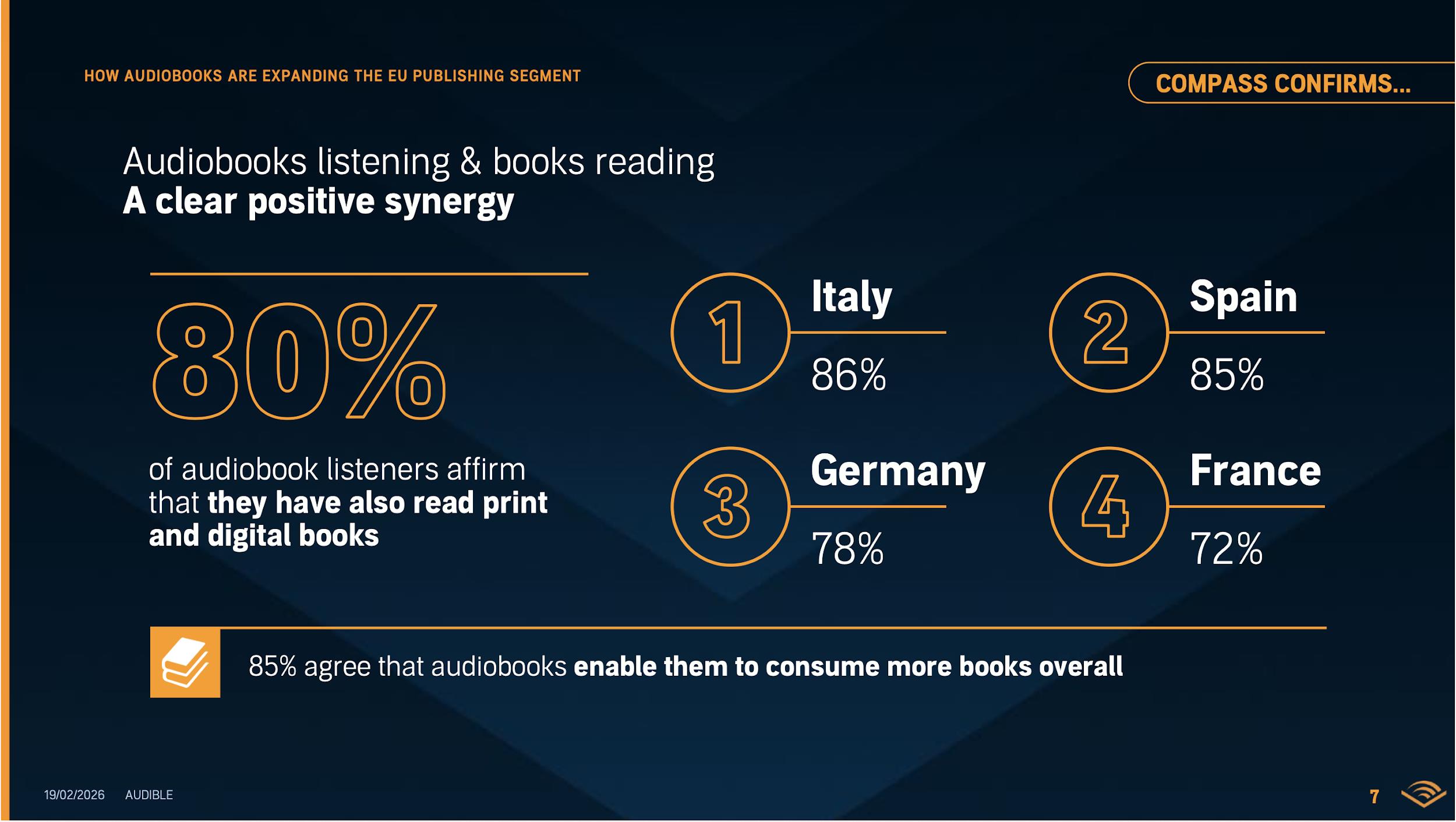
Barbara Knabe, Head of Content Acquisition EU & Latin America at Audible, presented the main findings of Audible Compass 2025, a study analysing listening habits across several international markets, with a particular focus on Germany, France, Italy and Spain. Her presentation positioned audiobooks as one of the fastest-growing segments within the publishing industry and showed how spoken audio has already become part of the everyday entertainment ecosystem. According to the report, more than 70% of respondents listen to audio content (77% in Spain), and almost five out of ten say they have increased their listening frequency in 2025 compared with the previous year.
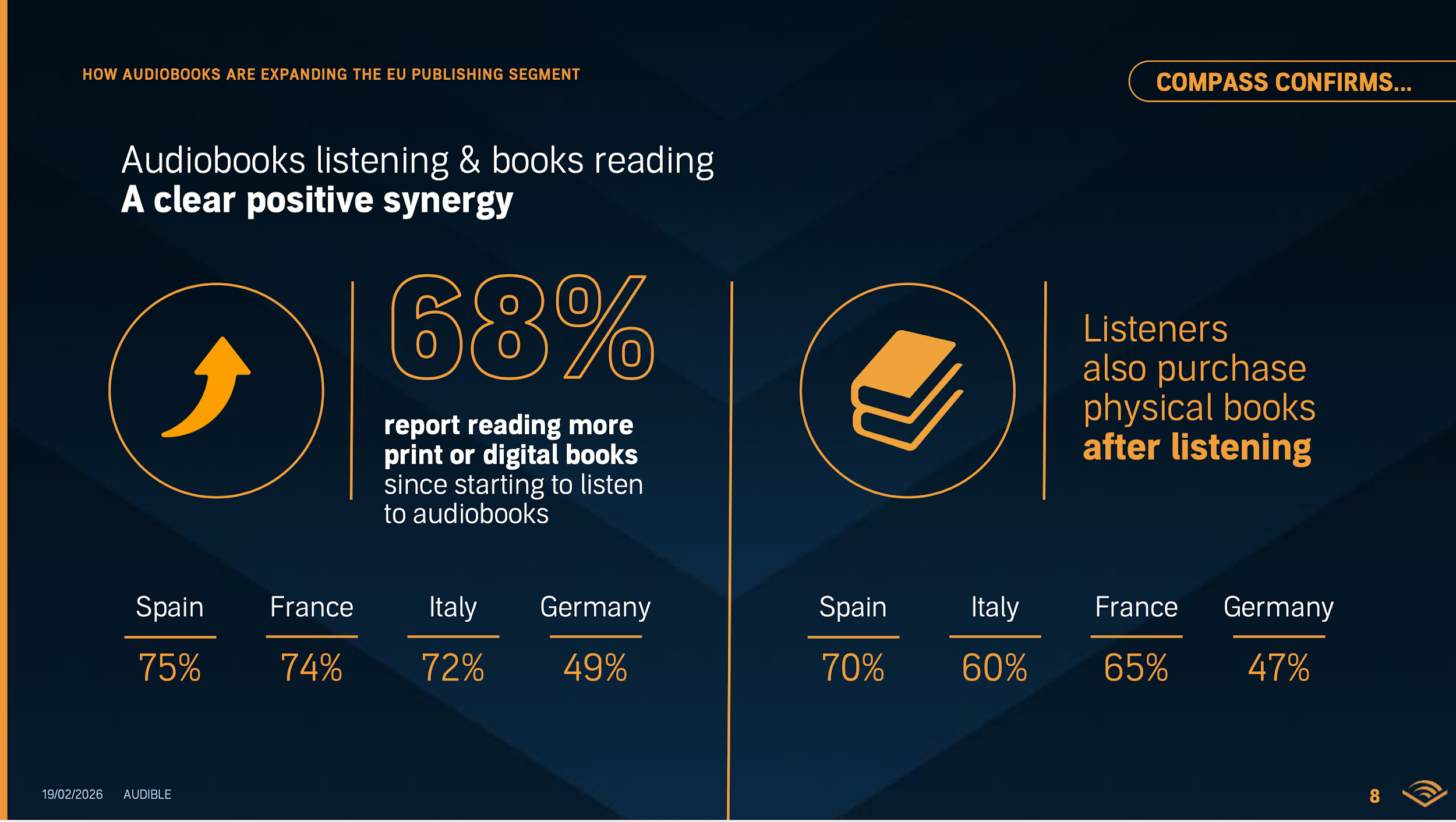
A central theme of the session was the need to dismantle the longstanding fear of “cannibalisation” between formats. With the phrase “keep the AND in mind”, Knabe invited the audience to think of audio and books as complementary formats. The data supports this idea of synergy: 80% of audiobook listeners are also readers (in Spain, the figure rises to 85%). In addition, most respondents say that listening to audiobooks has led them to read more (75% in Spain) or even to purchase the print edition after listening to the audiobook (70%).
Audio therefore acts as a bridge between cultural formats. Seventy-seven per cent of European listeners choose an audiobook after discovering the story in another medium—a series, film or graphic novel. For Knabe, this “cross-pollination” represents an opportunity to expand audiences and facilitate the discovery of stories beyond traditional book channels.
When it comes to listening habits, Knabe outlined a clear cultural map: most listening takes place at home (68%), compared with 48% who listen outside the home. Motivations vary by country. In Germany and Spain, audio is often used as an aid to sleep (34% and 27% respectively); in France, it is valued as screen-free entertainment (24%); and in Italy, it is integrated as regular companionship throughout the day (25%). Across all markets, the choice depends mainly on genre and theme—but also on the narrator, a decisive factor for 81% of listeners.
The preference for local content—one of the themes that would recur throughout the day—was already evident in the data, with 90% of users preferring to listen to stories in their own language and with accents close to their cultural context.
Looking ahead, Knabe highlighted two major growth vectors for the industry: the development of audio-first content, conceived from the outset for listening, and the strategic use of new technologies—including artificial intelligence—to expand catalogues without compromising quality.
“Every great story, in every language, should reach the right listener,” she concluded. The phrase neatly captures an ambition shared across the sector: enabling stories to circulate more freely between formats and reach wider audiences, expanding the cultural reach of reading beyond its traditional medium. A frictionless world—as Duncan Bruce of Spotify would later note—that platforms appear to understand well and are increasingly working to enable.
2. The impact of AI on the audio industry: threat, opportunity… or both
Following this initial market overview, George Walkley, founder of Outside Context and a specialist in artificial intelligence applied to publishing, addressed one of the most sensitive topics of the day—perhaps no longer quite so sensitive: artificial intelligence as a reality already present in the industry.
Walkley opened his presentation with a fundamental question: what do we really mean when we talk about artificial intelligence? The answer, he suggested, is neither simple nor singular. AI already is—and will increasingly become—many things: a generator of narratives, a tool for production efficiency, an engine for catalogue expansion and a channel for audience discovery. At the same time, it raises important questions about the role of professional storytellers, control over data and the growing dependence on large technology platforms. “Or all of the above, all at once,” he summarised. In that context, the key question no longer seems to be whether to adopt AI, but rather how to understand—and address—its full complexity.
On the creative side, Walkley was clear: AI is already part of the publishing process. Many authors use it to plan, research, structure or revise manuscripts—and in some cases even to write them—which has contributed to a threefold increase in the number of books published in recent years. Yet while publishing output continues to grow, the share of titles available in audiobook format still represents only a single-digit percentage of the overall catalogue. The gap between the print catalogue and the audiobook catalogue is therefore not only vast, he warned—it is also widening. Without AI, it would be impossible to close.
In terms of production, Walkley explained that even audiobooks narrated by human voices already incorporate AI-powered tools within professional production software, helping reduce both time and costs. Automated translation, meanwhile, opens the door to releasing the same work in multiple languages, significantly expanding the global reach of audio publishing.
For Walkley, however, the real challenge is structural. If the same companies control production tools, audience data and distribution channels, the market risks becoming concentrated in just a few hands. “This is not a marketplace. It’s a turnpike,” he noted, suggesting that public access could increasingly depend on the rules set by these platforms.
Rather than offering either a defence or a critique of technology, Walkley’s presentation was ultimately an invitation to reflect. Artificial intelligence is already embedded in the publishing ecosystem. The real question is not whether it will affect the audiobook sector, but whether publishers will be able to shape how it does so.
3. Ideas for creating a global audio catalogue
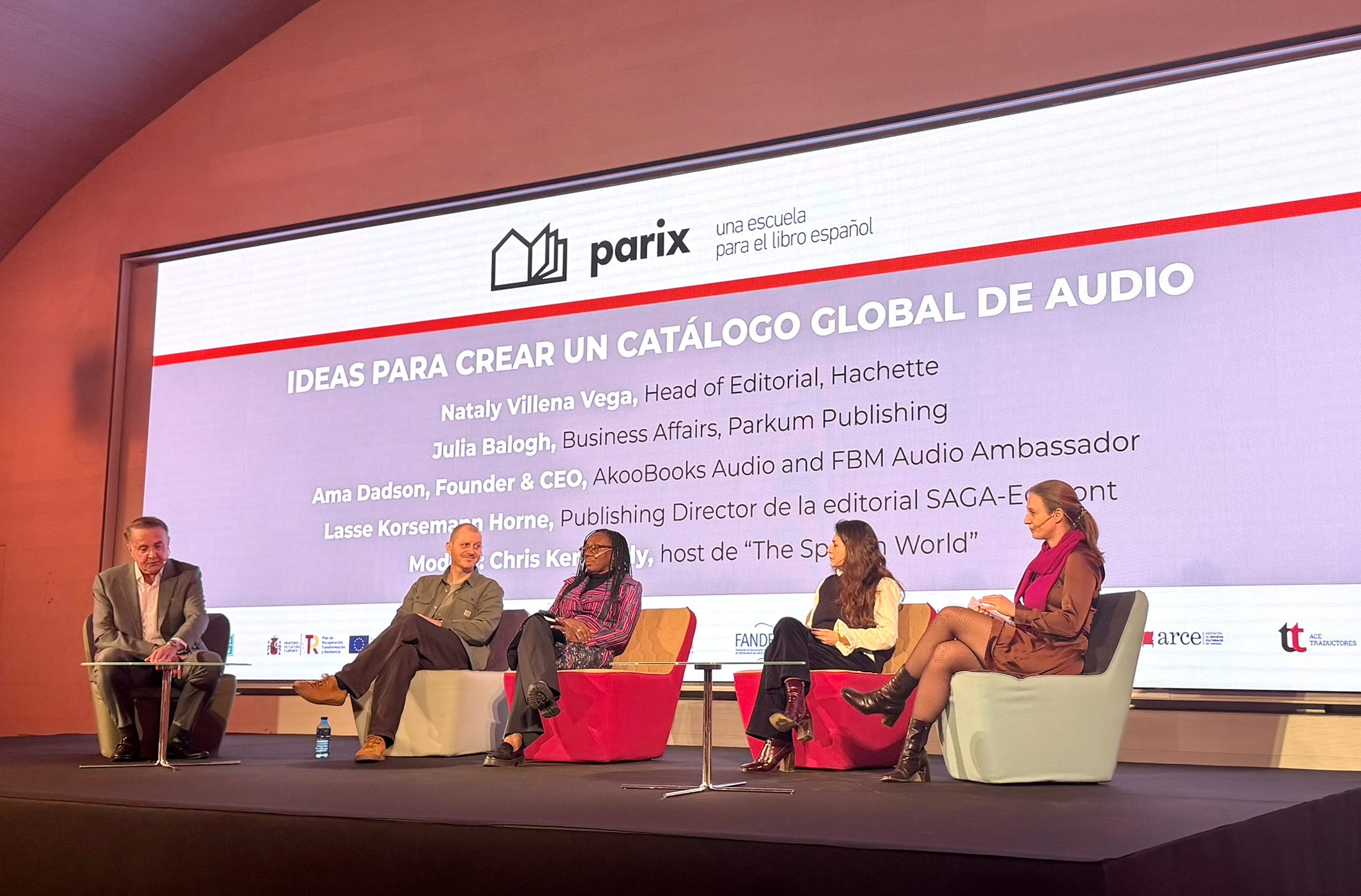
The first panel of the morning, moderated by Chris Kenneally and featuring speakers from Ghana, Germany, France and Denmark, explored a key question for the sector’s expansion: how to build a global audio catalogue without losing cultural identity. Despite the particularities of each market, the panellists agreed on one central idea: internationalisation does not mean homogenising content, but rather strengthening local voices.
Ama Dadson, founder of AkooBooks Audio, offered the perspective of the African market, where the main challenge is still to foster a culture of listening. This involves, on the one hand, building trust with publishers who have historically not included audio rights in their contracts and, on the other, developing a catalogue that speaks to three different audiences: local African listeners—often sensitive to pricing and reliant on offline listening solutions—the diaspora seeking stories and voices from their countries of origin, and an international audience increasingly interested in discovering new narratives from the continent. Technology plays a fundamental role in this process. Dadson explained that they are experimenting with synthetic voices not only to help address the audio catalogue gap, but also to respond to a broader strategic challenge: the underrepresentation of African languages in current language models.
From a different perspective, Julia Balogh, responsible for business affairs at Parkum Publishing—a German startup with international ambitions—highlighted the advantages of small publishers in a rapidly evolving market. Their size allows them to react quickly to events and emerging trends while maintaining a more direct relationship with authors. To scale internationally, she emphasised the importance of building alliances with local partners capable of distributing multilingual catalogues across different territories.
Nataly Villena, Head of Editorial at Hachette Livre, described a rapidly growing French market—expanding between 15% and 20% annually—and explained how her group uses artificial intelligence primarily in pre- and post-production tasks such as quality control and metadata management. The creative dimension of the process—editorial direction, casting and production decisions—remains firmly human. In the case of narration, the French publishing sector has sought to reinforce this distinction by introducing the label “interprétation humaine” to identify audiobooks narrated by people, highlighting the value of human performance and offering greater transparency to listeners. Villena also warned of a growing challenge in rights acquisition: as more players compete for audio rights, negotiations have intensified and require increasingly careful analysis to avoid inflated prices.
Lasse Korsemann Horne, Publishing Director at SAGA Egmont, reinforced this perspective based on his experience as a digital publisher operating across multiple European markets. His strategy focuses on producing stories with local talent—authors, narrators and accents specific to each territory—and distributing them globally. For Korsemann, voice conveys not only information but also emotion, which is why human narration remains central to his strategy. “We don’t know whether a machine will be able to translate that emotion—and, if so, whether the listener would perceive it as authentic. The future will tell.”
- Innovation in AI + audio: licensing, marketing, production and distribution
After a short coffee break and the first informal conversations of the day, the programme resumed. While George Walkley’s presentation had outlined the conceptual framework for understanding the impact of artificial intelligence, the panel moderated by Erin Cox—journalist and editor at Publishing Perspectives—shifted the discussion to a more practical level: what is already happening in areas such as licensing, marketing, production and publishing models?
John Ruhrmann, co-CEO of Bookwire, opened the conversation by addressing one of the most sensitive issues for the sector: licensing content to AI platforms. As he explained, artificial intelligence should not only be seen as a production tool but also as a new actor that requires access to publishing catalogues. The strategic question, therefore, is not whether technology companies will use publishing content, but under what contractual conditions they will do so. This is why, he argued, it is essential to establish clear licensing frameworks that guarantee transparency and fair remuneration for rights holders.
From a marketing perspective, Ralf Biesemeier, Managing Director of Zebralution, described how AI is already transforming the promotion of audio content. Beyond generating text or creative materials, current tools make it possible to analyse large volumes of data in order to identify potential audiences, segment campaigns and optimise advertising investment. In an increasingly saturated market, AI can help reach the right listener at the right moment—an undeniable competitive advantage.
Robert Holmström, Managing Director of Earselect, focused on the impact of AI on production workflows. The automation of tasks such as editing, audio cleaning and voice generation reduces both costs and production time, allowing a greater number of titles to reach the market. Even so, he stressed that editorial judgement and human supervision remain essential to maintain narrative quality.
Rickard Lundberg, CEO of Aniara, introduced a more structural perspective by referring to the emergence of AI-first publishers: publishing models designed from the outset to take advantage of technology, with lighter organisational structures, more agile production processes and the ability to scale content across multiple languages. This approach is always accompanied by human oversight to ensure quality because, as Lundberg emphasised in a phrase that quickly circulated among attendees, “velocity without quality is noise.”
- Listening to Europe: audio trends and opportunities for publishers
The panel moderated by Mariana Fegéd, Head of Markets for Spain, France and EMEA at Bookwire, offered an overview of how audio is evolving across different European markets, with Italy, France and Portugal as the main focus of the discussion. The presentations reflected a sector that is expanding, although at different speeds and with distinct priorities depending on the context of each country.
Paolo Girella, director of the publishing house Emons Record, explained how the Italian market is expanding the traditional concept of audiobooks towards new formats such as audio-first productions, narrative podcasts and audio fiction. Emons experimented with these formats years ago, adapting novels into audio series—perhaps before the market was ready. Today, with platforms such as Audible and Storytel investing heavily in this type of content, Girella believes that audio fiction could become one of the next areas of growth. He also highlighted the value of local content and recognisable narrators, who are highly appreciated because, even without perfect pronunciation, they bring cultural nuance and texture to the story.
From France, Robin Batet, editor at Lizzie (Editis group), presented data on the conversion of readers into listeners. In his catalogue, personal development titles stand out particularly in audio, with conversion rates close to 30%. They are followed by fantasy, with averages around 22% and some titles exceeding 40%, and romance, which shows more irregular results. Other genres such as general fiction and essays record lower conversion rates—around 6% and 4%—although Batet argued for continuing to produce them with a long-term perspective: “that’s where many of the future listeners are.” When new readers begin experimenting with the format, he explained, they need to find a catalogue with enough variety to choose from. As an example of editorial exploration, Lizzie has introduced the LitRPG subgenre in France, a hybrid of fantasy and video game culture that is attracting younger audiences.
Children’s audio presents its own specific challenges. Antoni Fournier, producer and artistic director at Bayard, explained that each age group requires a different narrative and production approach. Music, text adaptation and voice characterisation are key elements in maintaining the attention of younger listeners. Bayard works with composers, specialist scriptwriters and sound studios, and tests its content directly with children before releasing it. In some cases, audio is even becoming a gateway to broader narrative universes, with audiences discovering characters first through audio before encountering them in other formats.
The Portuguese case illustrates the early stage that many markets are still experiencing. Diana Monsanto, Director of Digital and Innovation at Grupo LeYa, explained that audiobooks are growing at double-digit rates in Portugal, although the market remains in its infancy. For LeYa, audio has strategic value because it extends the time available for reading by transforming everyday moments into listening time. To accelerate market development, Monsanto identified three priorities: experimenting with subscription models and free trials, expanding distribution channels, and building targeted catalogues aimed at specific audiences such as young people, families and students.
- The book reinvented: a frictionless future
The final session of the morning was delivered by Duncan Bruce, Director of Audiobook Licensing & Partnerships at Spotify. In just thirty minutes, he offered a clear view of how technology platforms are reshaping the relationship between readers, content and formats. His starting point was straightforward: if we want more people to read—or listen to—books, those stories need to be integrated into the digital environments where people already spend their time.
Spotify holds a clear advantage in this respect. The platform operates in more than 180 markets and has over 750 million monthly active users, nearly 290 million of whom are paying subscribers. Within this ecosystem, audiobooks are no longer an isolated product but coexist with music, podcasts and other types of content consumed daily by millions of people.
The result is access to new audiences. More than half of audiobook listeners on Spotify are under 35, and the number of users beginning to explore audiobooks is growing at a rate of more than 30% per year.
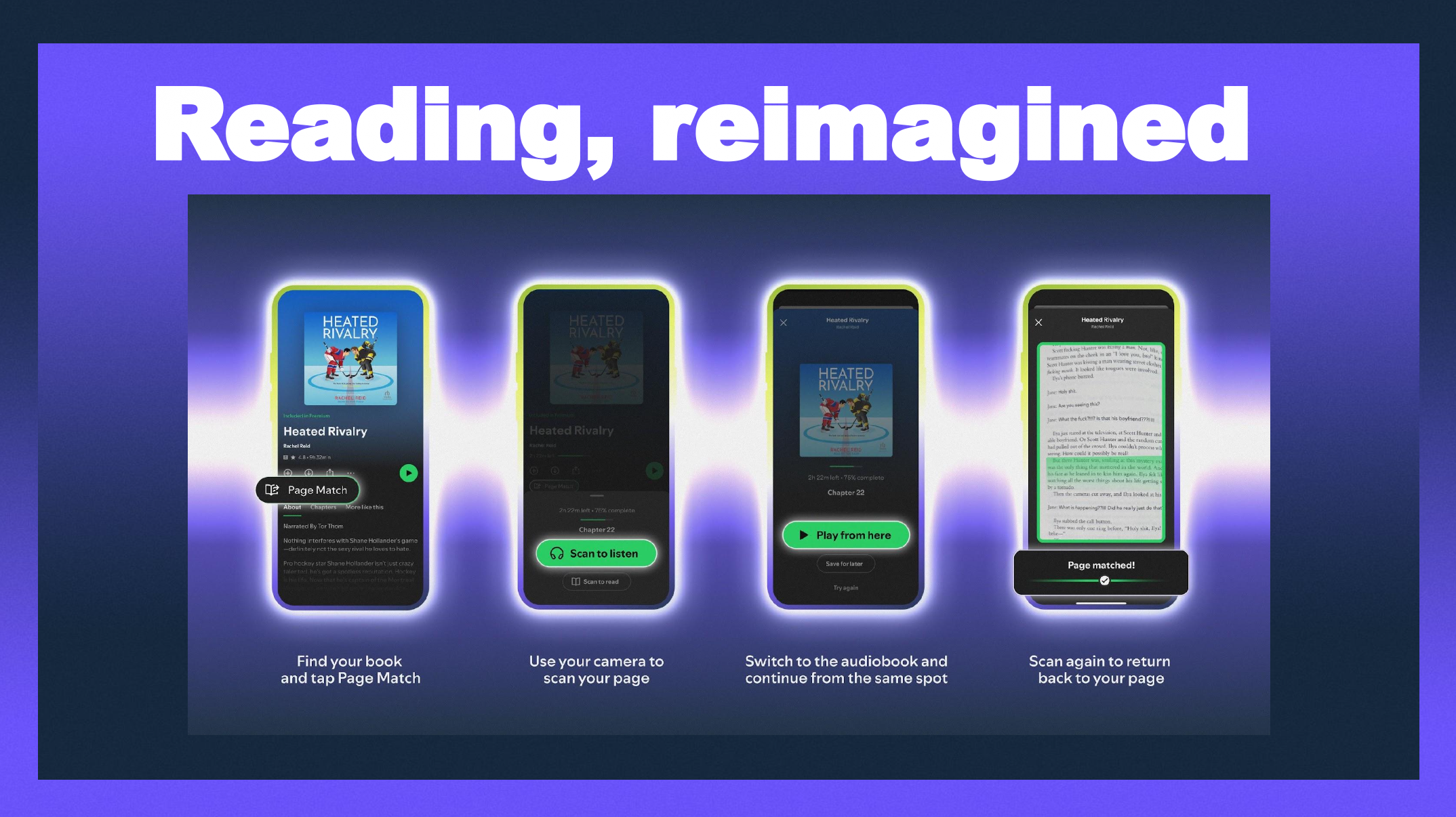
Perhaps the most revealing development, however, concerns the user experience. During his presentation, Bruce introduced Page Match, a tool that allows users to switch from a print book to an audiobook simply by photographing the page they are reading, automatically synchronising the narration at the exact point in the story. The objective is clear: to enable a story to accompany the reader throughout the day, allowing seamless transitions between reading and listening.
He also announced an agreement with Bookshop.org that will allow users to purchase physical books directly within the app, linking digital discovery with purchases from independent bookshops.
In Bruce’s words, the ambition is to eliminate any friction between formats and moments of consumption. Because, as he reminded the audience during his talk, “Reading a great book is something no one regrets.”
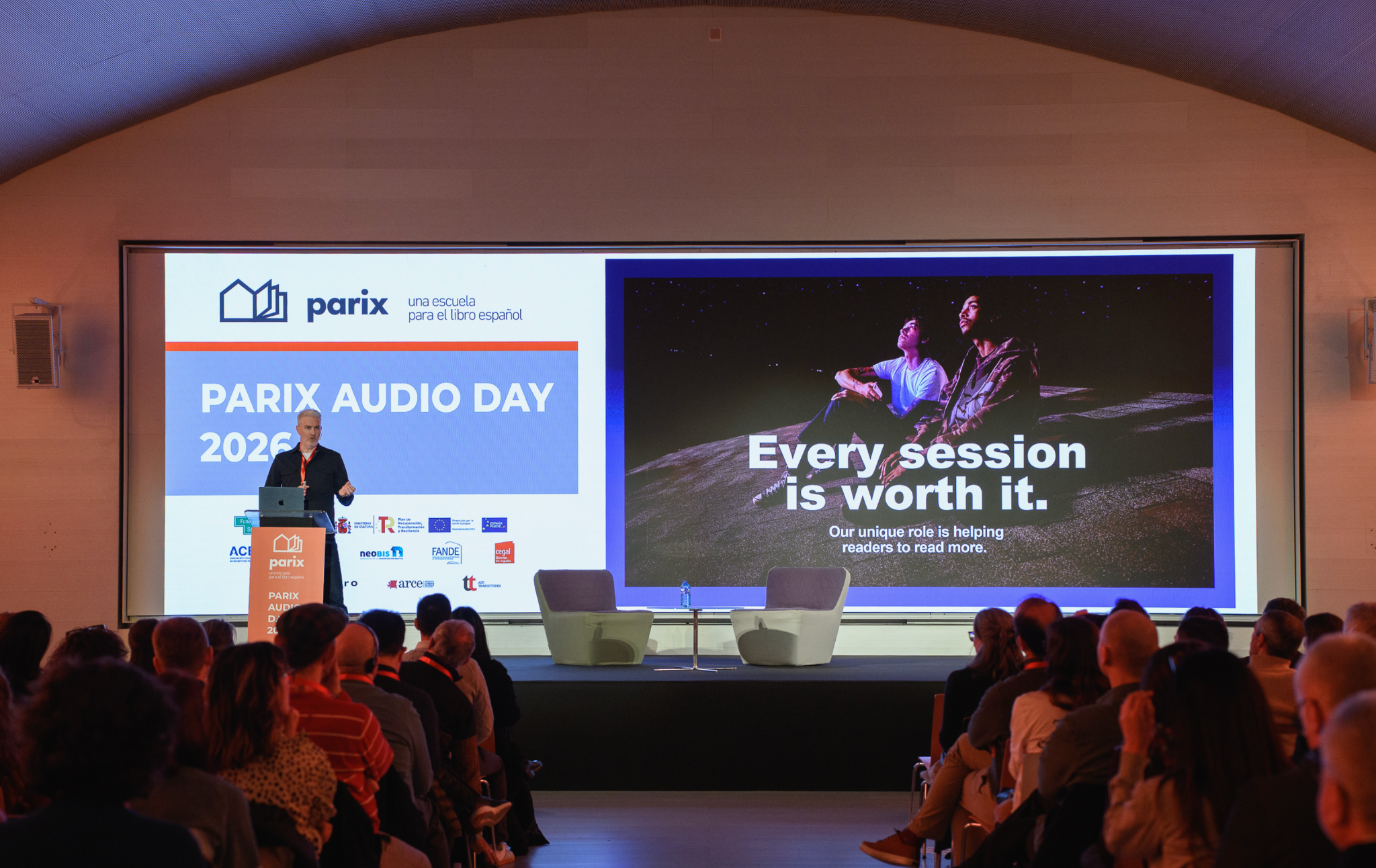
© PARIX_Audio_Day_FGSR.
After the lunch break—used for informal conversations and networking among professionals in the sector—the programme resumed with the afternoon sessions. There was also a change of language and moderator: Chris Kenneally handed over to Aránzazu Núñez, founder of StoryLab (Mexico). With “Atu”, as she is known among colleagues, there was no need for after-lunch coffee. With infectious energy that she maintained throughout the afternoon, she introduced the first speaker of the session: Julio Rojas.
- Human creation in the age of AI
Julio Rojas, the Chilean screenwriter and creator of audio fiction such as Caso 63, reflected on the role of human creativity in a context increasingly shaped by artificial intelligence. In an impressive exercise in synthesis—summarising four million years of human evolution in just twenty-two minutes—his talk began with a somewhat unsettling idea: for the first time in history, humans are facing a technology capable of competing—ever more effectively—in a field that has long been considered uniquely ours: creativity.
As Rojas explained, human creativity has always evolved alongside major disruptive technologies. Fire made it possible for communities to gather and share stories, while writing allowed thought to be externalised and transmitted across centuries. Artificial intelligence represents a disruption of similar magnitude, but with three characteristics that make it particularly transformative: it is agentic—capable of making decisions; it evolves exponentially—making it difficult to grasp the true scale and speed of change; and it possesses an increasingly sophisticated mimetic capacity to imitate human behaviour. Together, these factors create what Rojas described as a “fierce cocktail” capable of producing a radically different cultural landscape in a very short time.
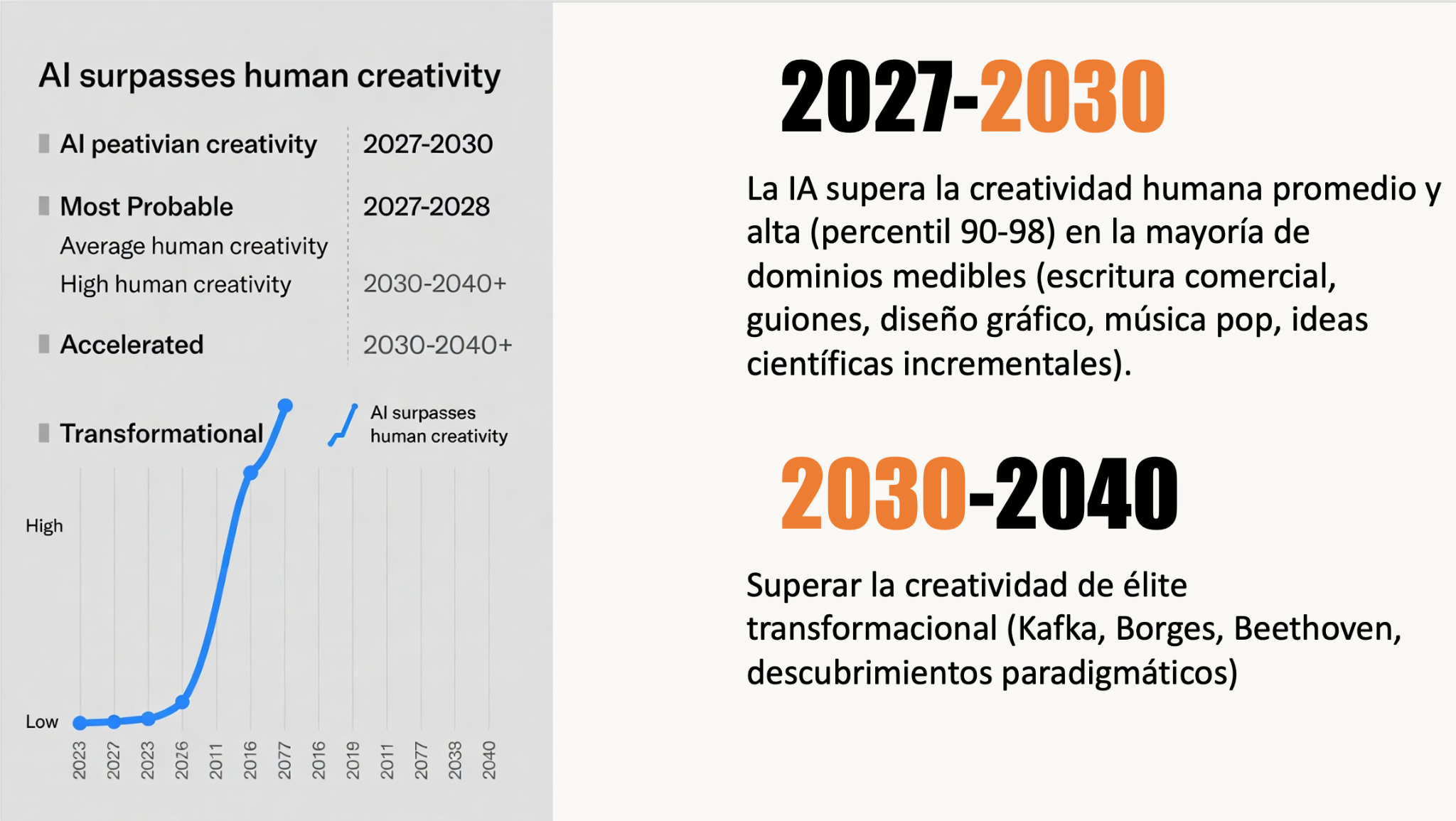
To explain this shift, Rojas drew on researcher Margaret Boden’s classification of three types of creativity: combinatorial, exploratory and transformational. The first—based on recombining existing elements—accounts for the vast majority of human creativity, roughly 90%. Transformational creativity, by contrast, is far rarer and historically associated with figures such as Kafka, Borges or Beethoven—and, increasingly, with certain AI models.
The unsettling point, according to several recent studies based on mathematical projections, is not that these systems are already competing with humans in many processes—particularly in narrative generation or divergent ideation—but that between 2030 and 2040 they may surpass them.
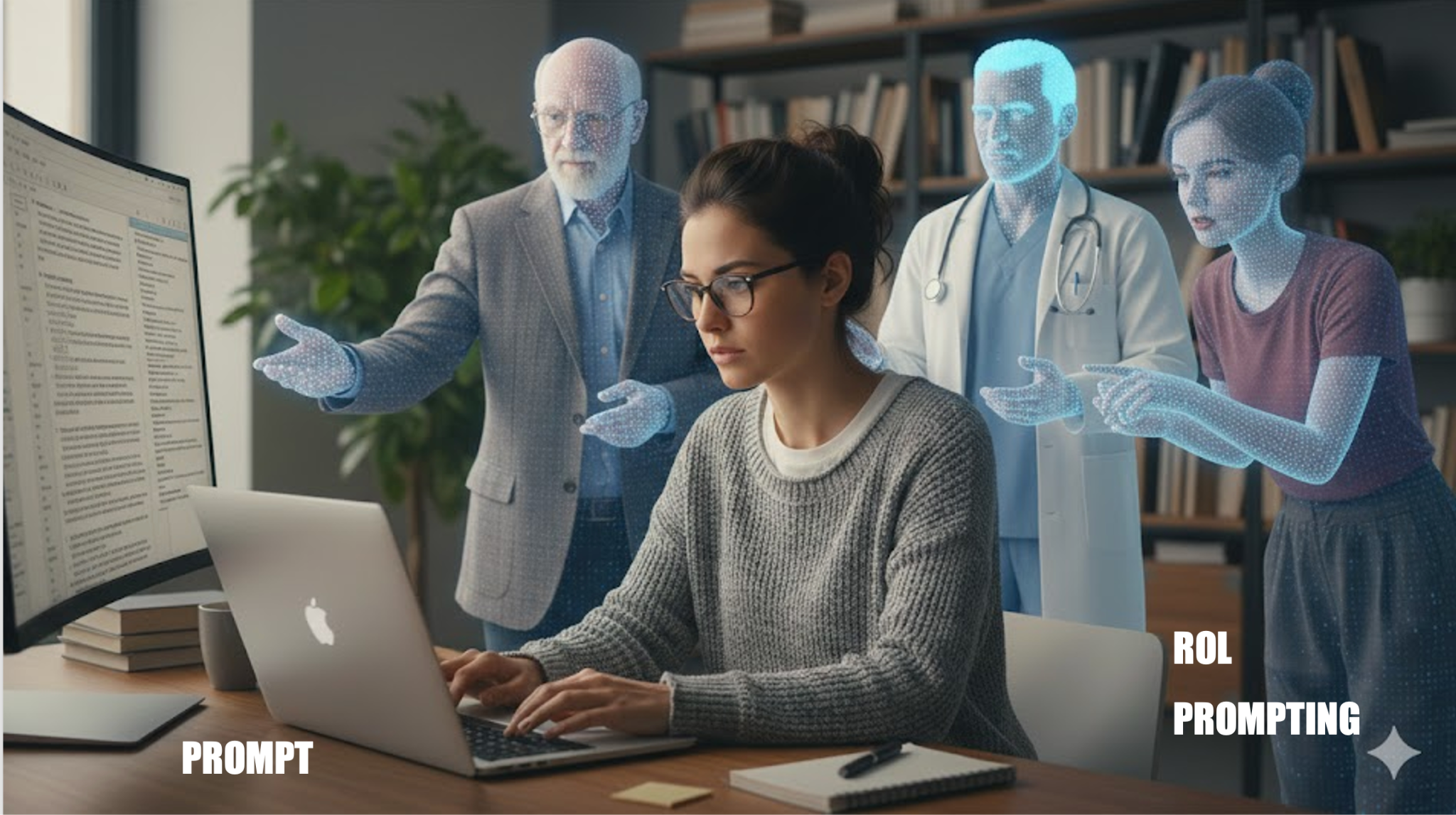
Faced with this prospect, Rojas argued for a more sophisticated model of collaboration between authors and technology. Rather than using AI merely through simple prompts, he proposed working with specialised “constellations of agents” that can act as advisers in different areas—history, character psychology or cultural context—supporting the creative process without replacing the author.
In the years ahead, he suggested, different types of cultural works will coexist: entirely human creations, hybrid productions developed alongside AI systems and fully synthetic content. In a context where the boundaries between them will become increasingly difficult to distinguish, transparency about the use of these technologies will be essential to maintain public trust. “Clear and unbiased labelling: shelves for pure humans, hybrids and synthetics,” he summarised with a touch of humour.
Rather than predicting the end of human creativity, Rojas pointed to a profound transformation of its role. Creators, he suggested, will increasingly become architects of narrative worlds capable of coordinating a “constellation of agents”: specialised systems that assist with research, character development or plot construction. In this scenario, authors will no longer work entirely alone but will instead lead an expanded creative ecosystem. Their role will not only be to write, but to imagine, orchestrate and bring coherence to these narrative universes.
In such a context, openness to reflection and reinvention becomes essential. Because, as in fiction, “it will never happen” is no longer a viable position. And because, as Rojas concluded—amid solemn faces and a few nervous laughs in the room—“as a creative species, we are no longer alone.”
- Audio narratives to attract new audiences: designing for listening
The panel moderated by Arantza Larrauri, Director of European and Latin American Markets at De Marque, explored one of the most thought-provoking topics of the day: the potential of audio fiction and narrative formats designed specifically for listening. The discussion brought together Alex Green and Bruno Teixidor (Oficina de Agitación Cultural), Mar Abad (co-founder of El Extraordinario) and Maribel Riaza (Content Acquisition Manager at Storytel), who shared their experiences in creating, producing and distributing this type of content.
One of the starting points of the debate was precisely this: audio should not necessarily be understood as a translation of written text, but as a narrative language with its own rules. Writing for audio means conceiving stories from the perspective of sound. Music, silence, atmosphere and performance become narrative elements that enrich the experience—but also require careful balance. As Bruno Teixidor noted, “the idea is that sound should add to the story, not illustrate it,” and therefore, “the more resources you have, the easier it is to make mistakes.” In the same spirit, Mar Abad emphasised the importance of credibility: “reality can be incredible, but fiction has to be believable.” To recreate the sound of rain, she explained, it can sometimes be more convincing to place a frying pan on the stove and let water splash than to record real rain.
Beyond the creative dimension, the panel also addressed the role these formats can play in expanding audiences. Alex Green observed that audio consumption is increasingly occupying everyday spaces where other types of content once dominated—from short journeys to moments of multitasking—and that the platforms hosting this content are beginning to function as community spaces. Listeners not only consume audio; they also share, comment and connect with others interested in the same stories or topics, creating dynamics similar to those of social networks.
The conversation also explored production and financing opportunities. Audio fiction projects are finding new avenues for development through collaborations with cultural institutions, companies and media organisations that see audio as an effective way to tell stories and connect with specific audiences. Added to this are live experiences, events and fan communities that extend the reach of these narratives beyond individual listening.
From a platform perspective, Maribel Riaza emphasised that this type of production also attracts audiences who may not initially identify as readers but are drawn to stories conceived directly for audio. In this sense, audio fiction and narrative podcasts are increasingly becoming spaces for experimentation where creativity, technology and new forms of audience engagement converge.
- Reinventing audio content production: scale, accent and structure
The afternoon programme continued with a presentation by Jorge Reyes, producer of Spanish-language audiobooks at Penguin Random House Audio, who offered a detailed overview of how Spanish-language audiobook production is evolving today.
Since 2014, Penguin Random House Audio has built a catalogue of more than 7,000 Spanish-language titles, with over 800 new audiobooks released in 2025 alone. Production is organised through specialised teams and in-house studios in Madrid, Barcelona, Mexico City and Buenos Aires, supported by an international network of collaborators that allows the company to scale production while maintaining the cultural specificity of each market. In 2025 alone, nearly 25,000 hours of audio were recorded and around 9,000 completed, with a team of 28 professionals dedicated exclusively to audiobook production.
One of the most significant strategic decisions has been the regionalisation of accents: currently, 58% of productions use Latin American variants and 42% use peninsular Spanish. Rather than aiming for a “neutral” voice, the strategy actively promotes regional diversity. The logic is simple: listeners tend to connect more strongly with narratives that reflect their own cultural and linguistic context.
In his market analysis, Reyes identified four key catalysts for the growth of Spanish-language audiobooks: the evolution of listening habits, with audiences often discovering the format through practical or educational content before gradually moving towards fiction; the strategic use of regional accents, which strengthens cultural identification; the development of bilingual productions, particularly relevant in markets such as the United States, where many listeners move naturally between English and Spanish; and, finally, the growing importance of narrative talent in sustaining both the quality and the expansion of the sector.
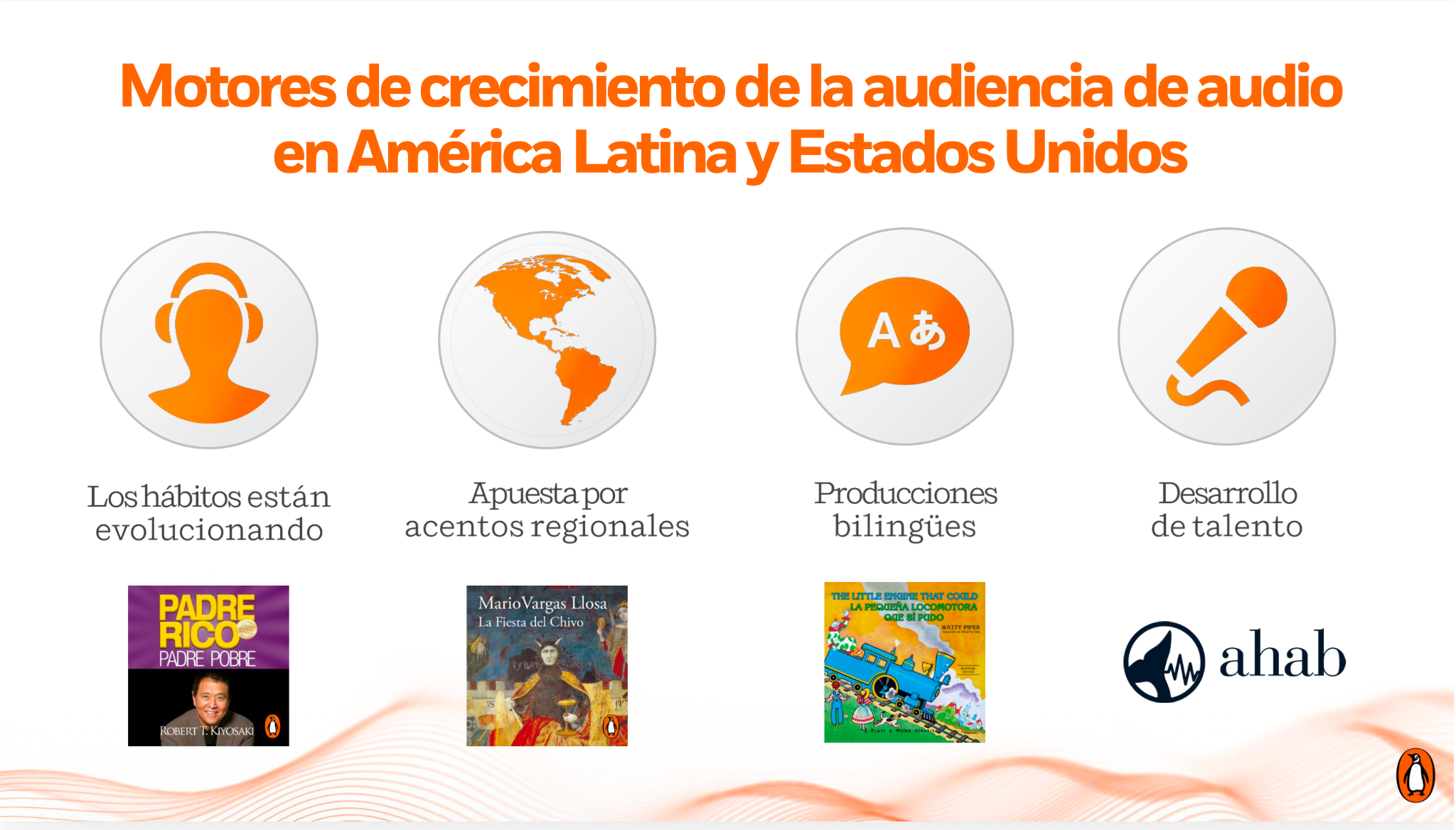
These shifts in listening behaviour and market dynamics have also led to a significant diversification of production models. Alongside traditional single-voice narration, there are now multi-voice interpretations—particularly well received in genres such as romance—full-cast productions, narrations performed by well-known personalities, and projects conceived directly as audio-first productions, each designed to meet different storytelling needs and audience expectations. The group is also beginning to explore the use of synthetic voices and authorised voice replicas, always within a framework of cooperation and transparency.
Throughout the presentation, alongside figures and trends, Reyes shared several practical recommendations drawn from his experience. The first: learn to listen—not only to the sound itself, but also to the audience, through their habits, reviews and comments. The second: do not confuse ambition with overproduction, because “overproducing a book can scare away or disappoint the listener; if the voice, text and performance are solid, nothing else is needed.” And the third—almost a professional mantra—was: when in doubt, always return to the text, because, as he reminded the audience, “that’s where everything is.”
- Trends in audio production in Ibero-American markets: professionalisation, efficiency and diversity
The panel moderated by Patricia Ibáñez brought together representatives from production companies and platforms across several countries to analyse recent developments in audiobook production across the Ibero-American market. Despite differences between territories, participants from Mexico, Argentina, Brazil, Colombia and Spain shared a common diagnosis: in just a few years, the sector has moved from an experimental phase to a period of rapid professionalisation.
Elena Bazán, Head of Sound Production at Audiolibre, structured her presentation around three ideas: “one important, one urgent and one interesting.” The first—the important one—is to take advantage of the current moment to apply creativity to production and experiment with audio-first projects that stand out not only for their story or narrator, but also for their sound design. The second—the urgent one—is to improve the management of audio rights as an independent format, which is still underdeveloped in many publishing contracts. And the third—the interesting one—is the growing commitment by publishers to produce their own audiobooks directly, a strategy that makes it easier to expand the original catalogue and better coordinate simultaneous releases across different formats. Regarding artificial intelligence, Bazán noted that it can support technical and production workflows but stressed that, in her company, “nothing that requires human sensitivity will involve AI.”
Eugenia Bascarán, co-founder of the Argentine production company Reading U, explained how artificial intelligence has become a key tool for managing large production volumes without compromising quality. Its use is concentrated mainly in the pre- and post-production stages: careful project preparation—text analysis, voice planning and narrative pacing—can save many hours of recording and editing. Bascarán emphasised that, for now, the human voice remains difficult to replace in most projects. Nevertheless, her team is experimenting with synthetic voices and authorised voice replicas in very specific cases, particularly in shorter non-fiction titles (up to five hours). In these projects, AI can achieve good quality standards while reducing pre-production times by up to 70% and costs by half, although human supervision remains essential.
Andrea Rodríguez Möller, editor at Planeta Audio, explained that the group’s audio catalogue grew by 46% in 2025, although only around 10% of its active catalogue is currently available in audiobook format—revealing the vast room for expansion. The strategy combines new releases with a strong focus on backlist titles, which account for nearly 80% of distribution, as many works enjoy a longer commercial life in audio than in bookshops. To expand the catalogue, the group is also experimenting with synthetic voices in certain projects, although human narration remains central and AI is seen primarily as a tool for scaling production rather than replacing editorial judgement.
Camila Leme, Content Director at Skeelo, highlighted the enormous potential of the Brazilian market. With almost 90% of the population over the age of ten owning a smartphone and one of the highest podcast consumption rates in the world, the country already has a strong listening culture. However, the audiobook catalogue remains relatively small: compared with around 400,000 active print titles, Brazil currently has only about 12,000 audiobooks available. For Leme, closing this gap will require expanding production capacity while also relying on artificial intelligence tools—always under human supervision in editorial decisions and final quality control.
Finally, David Roa, founder of Extrarradio Producciones, focused on the more artisanal dimension of studio work. A well-directed recording session, he explained, can significantly simplify post-production. In this context, he sees artificial intelligence as a tool that frees up time from logistical tasks and allows teams to focus more on artistic direction and text interpretation. Among the technologies already being explored, he mentioned voice-to-voice systems that make it possible to correct individual takes without recalling the narrator to the studio, as well as proprietary software designed to manage production workflows. These innovations are first tested within their own publishing label before being offered as services to other publishers.
Taken together, the panel offered a portrait of a rapidly expanding sector that continues to refine its processes and production models.
- Influence and authority in the age of AI and audio: from search engines to answers
Virginia Huerta, Managing Director at Archetype, analysed how artificial intelligence is transforming traditional mechanisms of digital visibility. For years, online competition focused on appearing at the top of search engine results; now, more and more users are asking questions directly to AI systems that generate complete answers without requiring them to consult multiple links.
In this new context, the notion of authority takes on a different meaning. Visibility no longer depends solely on ranking within a list of results, but on being included among the sources AI systems draw on to construct their responses. Who is cited, which voices are considered reliable and which brands appear within those automated answers therefore becomes a strategic factor.
Huerta also explained that AI is emerging as a new channel for discovery. Many users already rely on these systems to find information, summarise content or receive recommendations, often accepting the generated responses without consulting the original sources. In many cases, the user journey no longer ends with a click, but with an answer.
Faced with this shift, visibility strategies must go beyond traditional SEO. To remain relevant in an AI-mediated environment, organisations need to work across three key dimensions: relevance (answering specific questions with useful content), authority (being present in spaces where credibility signals are generated) and structure (creating clear, well-organised content that AI systems can easily interpret).
Within this context, Huerta highlighted the potential of audio—particularly podcasts—as a powerful tool for building digital authority. In-depth conversations with experts generate reusable content and help position both voices and brands within the emerging ecosystem of conversational search. In this evolving digital landscape, visibility no longer depends simply on appearing in results, but on being among the sources that help shape the answer.
- The boom in audio newsletters: analysis, community… and a model still under construction
The penultimate panel of the day focused on an emerging phenomenon within the audio ecosystem: the rise of specialised newsletters as spaces for analysis and professional conversation. Moderated by Eva Correa, founder and CEO of mecmec, the session brought together three of the most active voices in this field: Jorge Heili, creator of AudioGen.fm; Andrea Morán, head of Punto de Escucha; and José Antonio Gelado, author of Comunicando Audio.
Each of these publications has established itself as a reference point for professionals in the sector, offering complementary perspectives. AudioGen provides a strategic overview of the global evolution of audio and podcasting; Punto de Escucha explores the creative process behind sound productions through interviews and narrative analysis; and Comunicando Audio examines industry trends from the perspective of communication and professional market observation.
During the conversation, all three agreed that the emergence of these newsletters responds to a growing demand for specialised and curated information in an increasingly complex sector. They also shared several lessons learned from their experience: the importance of building a recognisable editorial voice, maintaining consistency in publication, and fostering a community around the content.
One of the main challenges discussed was monetisation. Although newsletters have become an effective tool for generating conversation and strengthening professional positioning, sustainable revenue models remain in an early stage. The participants agreed that brands have not yet fully explored the potential of this format, although there are clear signs that this may change as the audio ecosystem continues to expand.
While these newsletters have traditionally focused on analysing podcasts and the broader digital audio landscape, audiobooks are increasingly appearing in their coverage. This shift reflects the growing convergence between podcasting, audio and publishing. As audio continues to consolidate itself as a broader narrative space, this opening also signals new opportunities for analysis, conversation and development across the sector as a whole.
- Evolution of the audio industry in Latin America: an ecosystem under construction
José Manuel Anta, Director of the Spanish Federation of Publishers’ Guilds (FGEE), moderated the final panel of the afternoon. The discussion brought together Carmen Ospina (Director of Business Development, Marketing and Communication at Penguin Random House), Daniel Cladera (Head of Publisher Relations for Spain, Latin America and Brazil at Audible), Gabriel Polgati Rojas (Executive Director of RDF Media and Storytel Chile), Rodrigo Meinberg (Founder and CEO of Skeelo) and José Alberto Parra (Director of Digital Strategy for the United States and Latin America at Grupo Planeta).
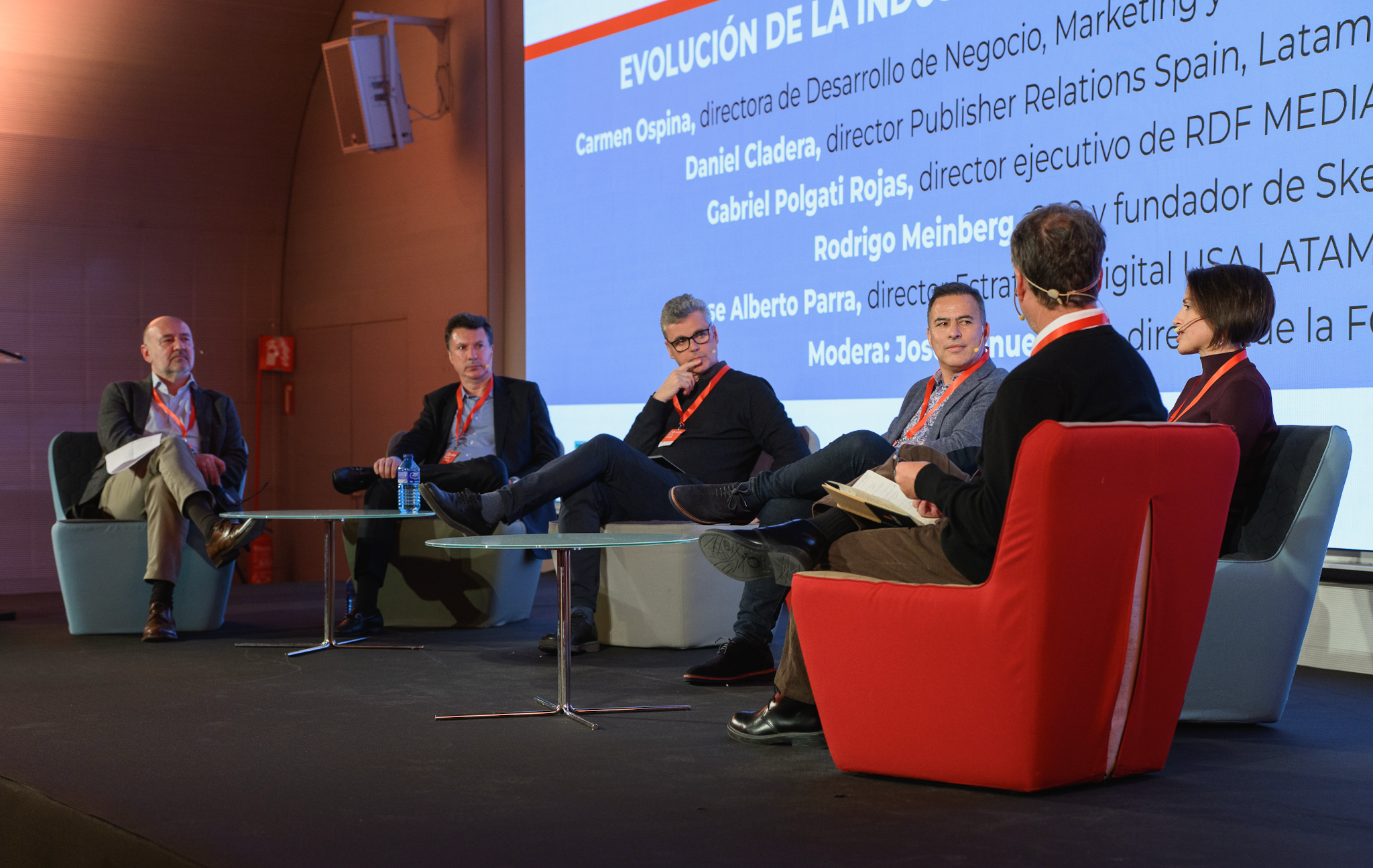
© PARIX_Audio_Day_FGSR.
Representatives from major publishing groups and streaming platforms in Latin America analysed the evolution of audio in the region—a market that participants agreed is still emerging, progressing at different speeds but with enormous potential. The conversation revolved around three main themes: the expansion of catalogues, the creation of listening habits and the search for business models adapted to very diverse realities.
One widely shared observation was the vast gap between print books and audiobooks. Meinberg illustrated this with the case of Brazil: of roughly 400,000 print titles and 200,000 ebooks, only about 12,000 exist in audiobook format. Closing this gap, he argued, will require the use of technology—including artificial intelligence—at least for those titles that might otherwise never be produced in audio. In the same vein, Cladera emphasised that the sector’s priority must be to expand the catalogue without compromising quality, combining professional production with new technological tools.
From an editorial perspective, Ospina and Parra stressed the importance of prioritising local content in order to stimulate demand. In emerging markets, they noted, consumption tends not to grow until a sufficiently broad catalogue exists to sustain it. At the same time, audio is evolving from a format traditionally associated with learning or information into a space increasingly linked to entertainment, where genres such as fantasy and romance are beginning to attract younger audiences.
Another key issue is the linguistic diversity of the continent. The panellists agreed that local accents foster stronger connections with audiences, although they also pointed out that Latin American listeners are accustomed to living with multiple variants of Spanish. As Ospina summarised, this cultural diversity should not be seen as a barrier but as an opportunity to build richer and more authentic catalogues.
Finally, the discussion addressed distribution models. Subscription currently dominates many markets, but speakers agreed that there is still no definitive model. In a context where audio competes with many forms of entertainment for users’ time—and subscription budgets—partnerships with other players in the media ecosystem are emerging as a promising path for growth. Polgati highlighted the potential of these collaborations, citing as an example the recent alliance between Storytel and RDF Media, which combines radio expertise with an audiobook catalogue and focuses on locally produced content from both literary authors and radio personalities.
In short, the message that closed the panel was clear: the Latin American market is still under construction, and precisely for that reason the decisions taken now—in terms of catalogue development, production models and business strategies—will shape its growth in the years ahead.
Conclusion
If this third edition of PARIX Audio Day made one thing clear, it is that the audio industry is currently experiencing both global expansion and a profound transformation in production, marketing and distribution processes, driven in large part by the emergence of artificial intelligence. New technologies, evolving narrative formats and changing listening habits are pushing companies across the sector to rethink business models, workflows and strategies for reaching audiences.
In this context, having spaces where audio professionals—from different backgrounds, disciplines and countries—can pause to reflect collectively, share experiences and connect becomes particularly valuable for the industry. After all, innovation often emerges precisely at those points of intersection.
Until the next edition, there will be much to explore, discuss and put into practice.
See you at PARIX Audio Day 2027!